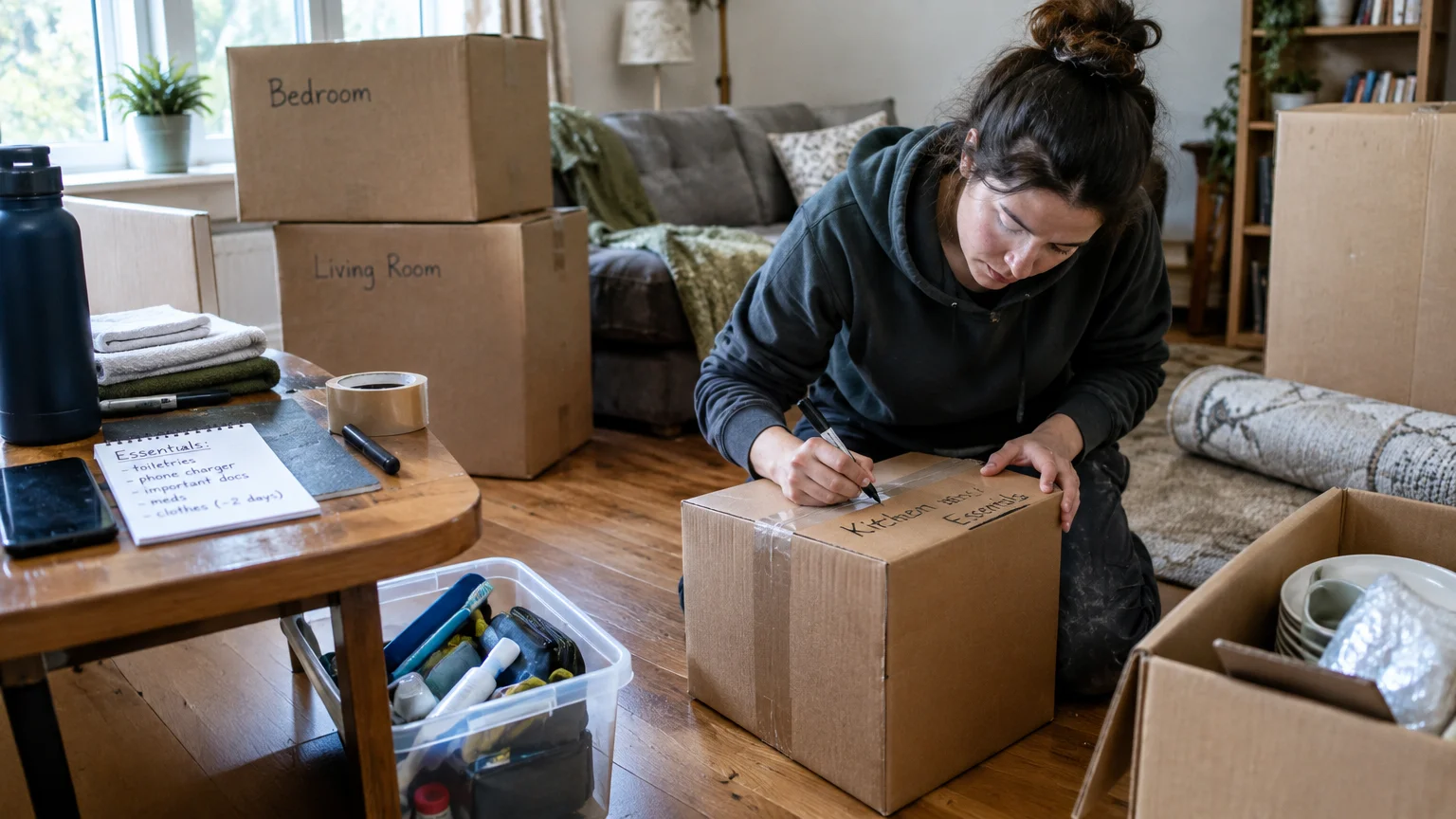
How to pack for a move efficiently starts with a simple plan. Sort items by how often you use them, then pack one room at a time. Wrap fragile goods, label every box, and keep medicines, papers, tools, and daily needs close. This plan helps Lynchburg households avoid stress and delays.
Table of Contents
- What should you do before packing for a move?
- What should you pack first when moving?
- How can you pack each room efficiently?
- What should you keep accessible during a move?
- How can you pack quickly when you are short on time?
- How do you protect fragile and valuable belongings?
- What should you do after everything is packed?
- Frequently Asked Questions
What should you do before packing for a move?
Before packing starts, make a short plan and gather your supplies. A plan helps prevent rushed choices, missing items, and boxes that are hard to open later. It also gives everyone in the home a clear job.
Create a realistic packing timeline
Start by choosing the move date. Then work backward from that date. Mark sorting, packing, cleaning, and loading on a calendar. Give extra time to rooms with many small items, such as kitchens, offices, and children’s rooms.
Sorting should come first. Put each item into one of four groups: keep, donate, recycle, or discard. Moving gives you a good chance to remove things that no longer suit the home or the family.
Pack items that you rarely use first. Seasonal clothes, spare bedding, books, decorations, and extra kitchen tools can leave the home early. Keep daily items out until you truly need to box them.
Gather boxes, supplies, and moving tools
Choose strong boxes in several sizes. Small boxes work well for books and canned goods. Medium boxes hold most household items. Large boxes are better for light things, such as pillows, towels, and blankets.
You will also need packing paper, tape, markers, labels, plastic bags, and protective wrap. Scissors, a tape measure, a utility knife, and a hand truck can also help. Keep these tools in one marked box so they do not vanish during the move.
Lynchburg Movers can help Lynchburg homeowners and business owners choose Packing Services for the size and timing of their move. A written plan also helps Local Movers see which items need extra care before moving day.
What should you pack first when moving?
The best first boxes hold items that are rarely used. Packing these things early creates space without making daily life harder. A room-by-room order also makes boxes easier to find when you arrive.
Start with items you rarely use
Begin with seasonal decorations, guest-room items, extra linens, books, wall art, and unused appliances. Pack special-event clothes and spare office supplies next. These items can usually stay closed until the new home is ready.
Do not mix random items just to fill a box. Groups that belong together are easier to label and unpack. For example, keep holiday decorations together instead of mixing them with bedroom items.
Books and other heavy goods belong in small boxes. Fill open spaces with paper so the contents do not shift. A box should feel firm when lifted, but it should not be too heavy for one person.
Pack room by room to stay organized
Choose one room and finish its low-use items before moving to another room. This cuts down on loose objects and makes progress easy to see. Keep a small area for items that everyone still needs each day.
Write the room name and a short contents list on two sides of every box. Add a note such as “open first” when a box holds an important item. Color labels can help, but clear words are most useful.
In a home office, keep each cable with the device it serves. Put screws, remotes, and chargers into small bags. Label each bag and place it inside the matching box. This makes setup easier after the move.
How can you pack each room efficiently?
Each room needs a slightly different packing method. Heavy items belong in small boxes, while soft items can fill larger boxes. Fragile goods need firm support on every side. The goal is to fill each box without making it unsafe to lift.
Use the right method for kitchens, bedrooms, and living areas
For dishes, put a soft layer at the bottom of a strong box. Wrap each plate and stand plates on their edges instead of stacking them flat. Wrap cups one at a time, place paper between bowls, and fill open spaces so nothing can move.
When learning how to pack bowls or how to pack dishes for moving, focus on steady support. Use clean paper or safe packing material. Do not use loose towels as the only cushion for heavy ceramic items.
Bedrooms often need less wrapping. Fold clothes into suitcases, drawers, or medium boxes. Place shoes in bags to protect clothing. Keep jewelry and small accessories in one clearly marked personal container.
Living rooms need care around lamps, mirrors, electronics, and furniture parts. Remove loose shelves and wrap them separately. Keep screws and hardware in labeled bags taped to the item they belong to.
Label boxes so unloading is easier
A useful label names the room, general contents, and handling need. “Kitchen—plates—fragile” gives more help than “kitchen” alone. Mark the top and at least one side of each box.
Avoid labels that point out valuable items. Use general words for private belongings. Keep a separate list for the homeowner instead of writing private details on the box.
Unloading is easier when boxes go near their final rooms. Apartment Movers and Furniture Movers can also help with stairs, elevators, large pieces, and tight spaces when the move needs extra care.
What should you keep accessible during a move?
Keep one essentials box for the first day and a personal bag for each person. These items should travel with the household when possible. They should not disappear inside a moving truck. Easy access matters most during the final hours.
Prepare an essentials box for the first day
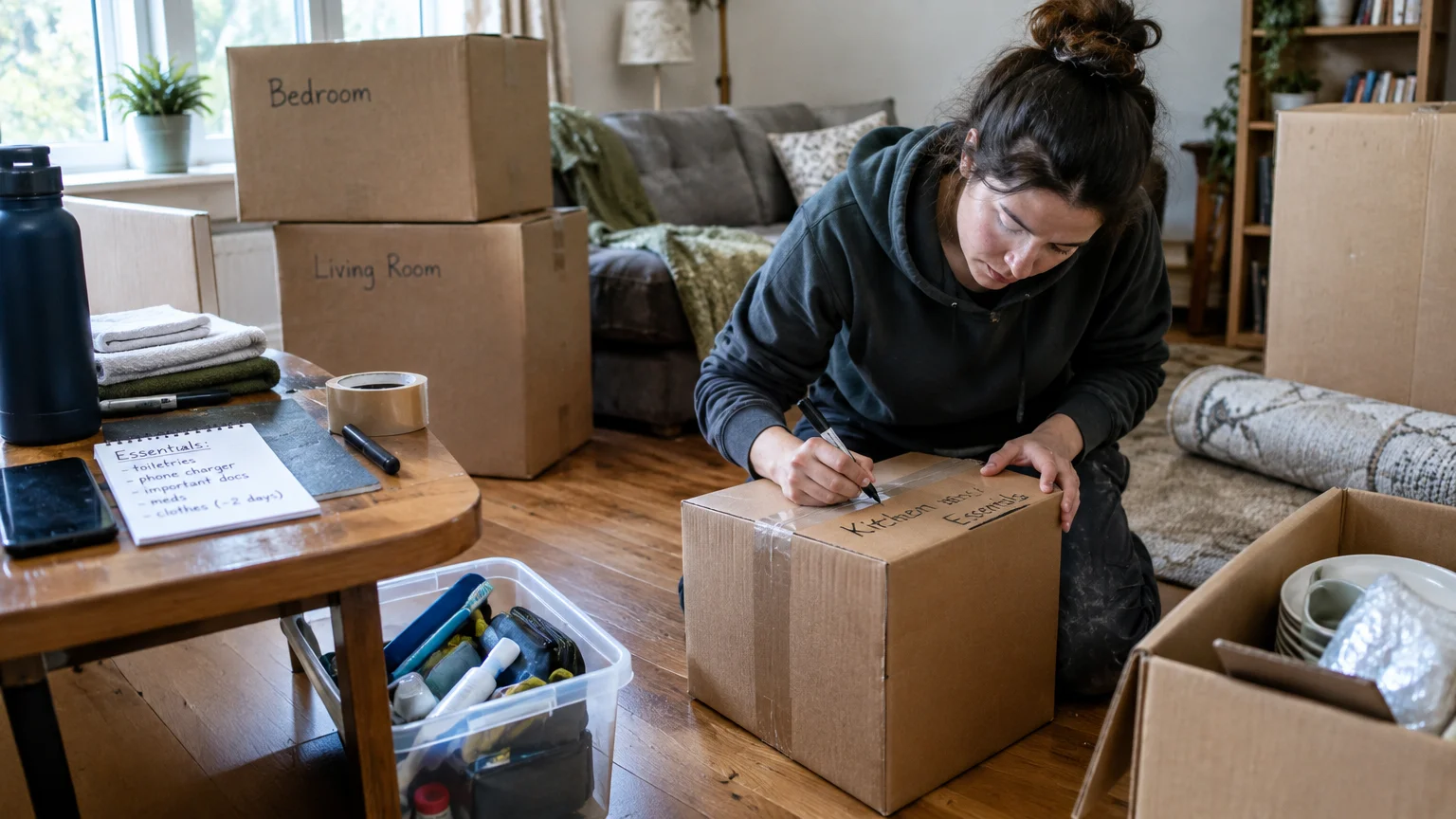
An essentials box may hold toiletries, toilet paper, towels, basic dishes, snacks, water, chargers, work clothes, and simple cleaning supplies. Add a box cutter, trash bags, paper towels, and a small tool kit.
Each person may need a change of clothes, sleep items, and comfort goods. Families should add supplies for children and pets. Mark the first-night box clearly and keep it easy to spot.
Keep important daily supplies together instead of spreading them across many boxes. A small cooler can hold food that must stay cold during the trip. Check that each item fits the moving plan before loading it.
Separate documents, valuables, and medications
Important documents, cash, jewelry, keys, and small electronics should stay with their owner. Prescriptions and other needed medicines should also remain close. Never place irreplaceable items in an unmarked box.
A personal travel bag can hold passports, birth records, lease papers, insurance files, and school records. Digital copies may help, but they do not replace safe storage for original papers.
Tenants should keep copies of move-in records and property instructions. Business owners should protect client files, access cards, devices, and work materials. Lynchburg Movers can help customers plan special care for items that should not mix with normal boxes.
How can you pack quickly when you are short on time?
When time is short, protect essentials first and make simple choices. A fast plan should still use labels, strong boxes, and safe packing methods. Speed should not lead to loose items or boxes that are too heavy.
Prioritize essentials and high-risk items
Start with medicines, documents, valuables, fragile goods, work tools, and first-night items. Then pack the kitchen, bathroom, bedrooms, and living areas. This order keeps the home useful while the rest is boxed.
Use one box for each urgent group. Label it clearly and move it away from busy packing areas. High-risk items include glass, liquids, sharp tools, plants, and anything that may leak or break.
Do not pack hazardous materials without checking the mover’s rules. Some household products may need special handling or disposal. If you are unsure, set the item aside and ask the moving company before loading it.
Use a compressed packing schedule
A short schedule can divide work into focused blocks. One person can sort while another wraps and labels. A third person can remove donations or move closed boxes away from hallways.
Work from the least-used room to the most-used room. Pack groups of items instead of walking between rooms for one item at a time. Close and label each box before starting another.
For a tight timeline, professional Packing Services may help with a full-home pack, fragile goods, or custom protection. Long Distance Movers may also need a clear list for moves across state lines. Share special instructions before loading begins.
How do you protect fragile and valuable belongings?
Fragile items need a strong box, soft wrapping, and no open gaps. Valuable belongings need physical protection and careful control. The safest method supports each item from the bottom, sides, and top.
Wrap, cushion, and reinforce delicate items
Wrap glassware, dishes, framed art, lamps, and electronics one item at a time. Add cushioning below and between the items. Use small boxes for heavy fragile goods. Do not let the box walls carry all the pressure.
When learning how to pack plates for moving, place plates on their edges with padding around them. Put paper between bowls and support around the stack. The box should close without pressing down on the contents.
Use clean, dry packing material. Tape boxes well, but never tape directly to finished furniture or artwork. For valuable pieces, take clear condition photos before wrapping them.
Load fragile boxes safely for transport
Fragile boxes should sit on a stable surface away from heavy items that could fall. Do not place them under furniture or near sharp tools. A label helps, but safe placement matters more.
Wrap large furniture before moving it through doors and halls. Empty drawers, secure doors, and pack removable parts separately. Furniture Movers can help with heavy pieces, stairs, and narrow spaces.
For a long trip, check that boxes cannot slide or tip. Keep personal valuables with the owner when practical. Local Movers can also review fragile loading needs before the truck is full.
What should you do after everything is packed?
After packing, complete a final walkthrough and prepare clear unloading notes. This check can find items in closets, cabinets, garages, and outdoor areas. It also helps the move end in an orderly way.
Complete a final home walkthrough
Walk through every room with a short checklist. Open closets, drawers, shelves, cabinets, attics, garages, and storage areas. Check behind doors and under furniture for items that were missed.
Look for open windows, running taps, plugged-in appliances, and lights that should be off. Remove trash and separate items that should not travel. Keep keys, access cards, and property papers in your personal bag.
Take one last look at walls, floors, and furniture before loading. Note existing marks when needed. A clean walkthrough gives the next resident or office user a better start.
Prepare boxes and movers for efficient unloading
Group boxes by destination when possible. Tell the moving team which items need careful handling and which boxes should open first. Keep walkways clear, and make sure doors, elevators, and parking areas are ready.
A simple room plan can guide placement in the new space. Put beds, basic kitchen items, and bathroom supplies where they will help first. Do not stack boxes in front of doors, stairs, or important outlets.
Key takeaways
- Pack by use: Start with items the household rarely needs.
- Work by room: Finish one area before starting another.
- Protect fragile goods: Wrap each item and fill empty spaces.
- Label clearly: Name the room, contents, and handling needs.
- Keep essentials close: Carry documents, medicines, valuables, and first-day supplies.
A careful plan can reduce stress for homeowners, tenants, and business owners. Lynchburg Movers supports organized moves with help that may include packing, loading, furniture care, and transport. Contact us to request a moving quote and discuss the help needed for your move.
Frequently Asked Questions
How early should someone start packing for a move?
Most households should start with low-use items once the move date is known. Seasonal goods, decorations, books, and spare linens can be packed first. Daily items should remain available until the final days. A written timeline helps everyone know what to pack next.
How should dishes be packed for moving?
Wrap each dish separately and place plates on their edges inside a strong box. Add padding below, between, and above the dishes. Pack bowls with paper between them and fill empty spaces. The box should close without pressure and should not feel too heavy to lift safely.
What should go in a moving-day essentials box?
The box should hold toiletries, medicine, chargers, snacks, water, towels, basic tools, cleaning items, and a change of clothes. Families may also need items for children or pets. Mark the box clearly and keep it separate from the truck when practical.
Is it better to pack one room at a time?
Yes, packing one room at a time usually makes sorting and labeling easier. It reduces loose items and helps the mover place boxes in the right area. Low-use rooms should come first. The kitchen, bathroom, and bedrooms can wait until closer to moving day.
What should not be packed in a moving truck?
Items that may leak, burn, explode, or cause harm may need special handling. Medicines, documents, valuables, and essential electronics should stay with the owner when practical. Ask the moving company about restricted items before packing or loading them.
If you are not sure what you are dealing with, it is worth having someone look at it before it turns into a bigger job. Get in touch with Lynchburg Movers today and we will tell you where you stand.