How to get rid of old furniture for free starts with checking its condition, size, and timing. Donate clean pieces, give useful items to neighbors, or list them for pickup. For damaged furniture, check local rules before moving it. Careful planning helps Lynchburg households clear space without injury or last-minute stress.
Lynchburg Movers helps homeowners, renters, and businesses plan the moving work that remains after decluttering. In Lynchburg, a clear plan can keep unwanted furniture from blocking halls, loading areas, or the moving truck.
Table of Contents
- How can you get rid of old furniture for free?
- Can you donate unwanted furniture before a move?
- Where can you give away furniture locally?
- Can you sell old furniture quickly before moving?
- What should you do with damaged or unusable furniture?
- How do you dispose of large furniture responsibly?
- How should you decide what furniture to take to your new home?
How can you get rid of old furniture for free?
The best choice depends on the furniture’s condition, size, and removal date. Clean, useful furniture may find a new owner. Broken or unsafe furniture needs a different plan. Start early so you have more choices and less pressure.
Start with condition, size, and timing
Look at every piece in good light. Check for stains, odors, loose parts, pests, water damage, mold, and sharp edges. A small mark may be fine for a giveaway. Serious damage should be shared before anyone agrees to take the item.
Measure large pieces before you list them. Record the width, depth, and height. Note whether legs, shelves, cushions, or doors come off. These details help another person decide if the furniture fits their home and vehicle.
Timing matters during a move. A family with several weeks may donate, sell, or give away furniture. A family leaving soon may need a simple pickup or disposal plan. The goal is to remove each item safely before moving day.
Choose the simplest removal option
Use this order when deciding what to do:
- Keep it if it fits the new home and remains safe and useful.
- Donate it if a group accepts its type, size, and condition.
- Give it away if someone nearby can use it and collect it.
- Sell it if the item has clear value and there is enough time.
- Reuse or recycle parts when the whole item cannot be saved.
- Arrange proper disposal for furniture no one can safely use.
Do not promise one item to several people. Choose a pickup window and keep the path clear. If a full home move also needs planning, Local Movers or Loading & Unloading Help may fit better than handling every heavy item alone. Lynchburg Movers can help Lynchburg homeowners decide which option fits the timeline and furniture.
Can you donate unwanted furniture before a move?
Yes, donation can work when furniture is clean, safe, and useful. Each donation group has its own rules. Check those rules before loading a vehicle or setting a pickup. Some groups accept certain furniture but reject large, damaged, or stained pieces.
What donation groups commonly accept
Many donation groups look for clean tables, chairs, dressers, desks, bookcases, sofas, and bed frames. They may also accept office furniture in good condition. Mattresses, upholstered items, and large pieces often have special rules because they need extra care and storage.
Ask these questions before arranging a donation:
- Does the group accept this furniture type?
- Must the household deliver it, or is pickup available?
- Are stairs, elevators, or narrow halls a problem?
- Does the item need to be taken apart first?
- Will the group reject stains, tears, odors, or pet damage?
A donation group may decline a piece even when it looks usable at home. That is normal. The group must protect staff, volunteers, and future users. A clear description can prevent wasted time for everyone.
How to prepare furniture for donation
Clean each surface with a product made for that material. Remove personal items from drawers and shelves. Wash removable covers when the care label allows it. Tighten loose screws and replace simple missing hardware when practical, but do not hide damage with a quick cover.
Take clear photos from several sides. Show labels, marks, damage, and parts that come off. Write down the measurements and mention the floor level, stairs, elevator, or parking limits. An honest description helps the group plan the right vehicle and crew.
Keep donated items inside until pickup when possible. Do not leave furniture near a curb during rain or snow. Wet wood, fabric, and particleboard can become unusable quickly. If a group cannot accept the item, switch to a giveaway, reuse, recycling, or disposal plan.
Where can you give away furniture locally?
Local sharing groups can help usable furniture reach someone nearby without a long sales process. Use a clear listing, set a pickup time, and protect personal safety. Giving furniture away works best when the item is ready to move and the recipient knows the pickup limits.
Online community groups and sharing networks
Neighborhood groups, community boards, and sharing networks often allow posts for unwanted household items. A strong post includes the item name, measurements, condition, pickup area, and a simple note such as pickup only. State whether the furniture is upstairs, in a basement, or behind a narrow gate.
Use recent photos and avoid vague claims such as perfect condition. Say what a person will see. For example, a listing might note that a desk has surface scratches, two drawers, and removable legs. Honest details reduce canceled pickups and help the next owner bring the right help.
Do not share private information in a public post. Arrange pickup during daylight when possible. Have another adult nearby, keep pets in another room, and do not let unknown people walk through the home. The recipient should bring enough people and tools for the item.
Giving furniture directly to someone who needs it
A neighbor, friend, tenant, student, or local group may need a table, chair, dresser, or shelf. Ask people you already know before posting in public. Community centers, shelters, and volunteer groups may also know families who need basic furniture, but their rules differ.
Do not assume another person can move a heavy item. Share the measurements, weight concerns, stairs, and pickup deadline. If the recipient cannot lift it safely, change the plan. A handoff works only when the item leaves without injury or property damage.
Keep a backup plan. People may cancel, arrive without a vehicle, or find that the furniture does not fit. Across the main Lynchburg area, including Rivermont, Fort Hill, Madison Heights, Timberlake, Rustburg, Appomattox, and nearby communities, households can use local moving support when safe loading help is needed. Confirm what help is available before the pickup date.
Can you sell old furniture quickly before moving?
Selling can make sense when furniture is clean, useful, and likely to attract a buyer before the move. It takes more work than a giveaway. The seller must answer questions, arrange payment, and manage pickup. A short deadline may make donating or giving away the better choice.
How to create an honest, useful listing
Start with a simple title that names the item, material, color, and size. Add photos in daylight. Show the front, back, inside, hardware, labels, and any damage. Mention whether the item comes apart and what tools or help may be needed.
Use plain facts instead of sales language. A useful description says how long the household has used the item and whether it comes from a pet-free or smoke-free home, if known. Explain what the buyer must bring, along with the pickup window and access limits.
Answer messages with the same information each time. Do not hold an item without a clear agreement. Keep payment and pickup details simple, and use a safe handoff plan. If a buyer asks you to move a large item alone, refuse and arrange safer help.
When selling takes more time than it saves
Selling may not fit when the move is close, the item has damage, or the household cannot manage messages. Large furniture may need several people, moving blankets, straps, and a suitable vehicle. A buyer who cannot remove the item may cancel at the last moment.
Set a firm decision point. If no reliable buyer agrees by then, switch to donation, giveaway, reuse, or disposal. This keeps one hopeful listing from delaying the whole move. The same rule helps business owners clear desks, shelves, and waiting-room furniture before an office relocation.
Commercial & Office Movers can help reduce downtime during a business move, while Apartment Movers may help renters work around tight halls, stairs, and elevators. These services do not replace a clearing plan, but they can make the remaining move easier to organize.
What should you do with damaged or unusable furniture?
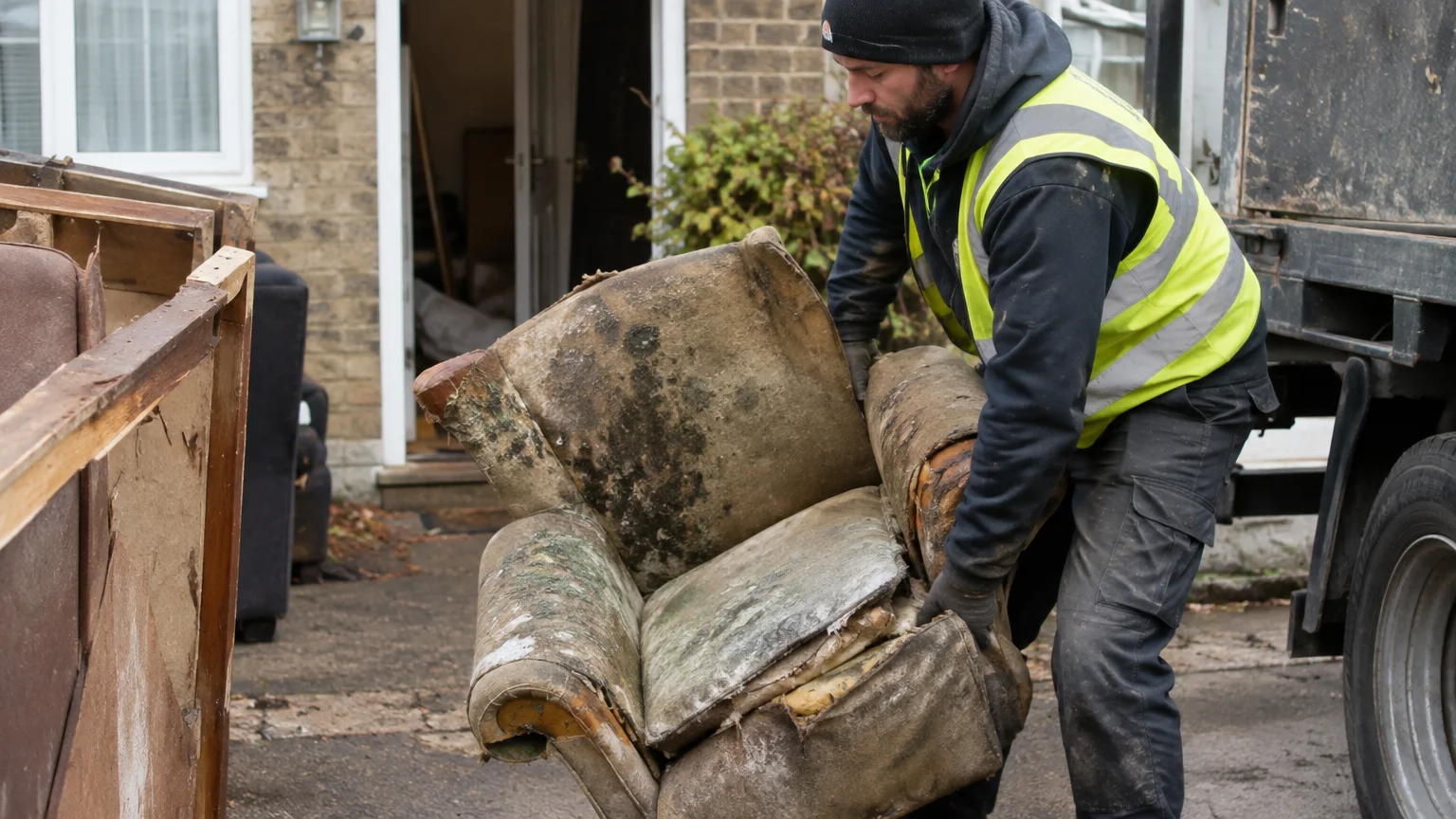
Damaged furniture should be repaired, reused, recycled, or disposed of based on its condition. Furniture with mold, pests, broken frames, exposed nails, or major water damage may not be safe to donate. Describe problems clearly and keep unsafe items away from people and pets.
Repair, reuse, or dismantle what you can
Simple repairs may save a chair, table, or shelf. Tightening hardware, replacing a knob, or securing a loose leg may be safe for a homeowner. Stop if the repair involves unstable weight-bearing parts, power tools you do not know, or materials that may contain hazards.
Some pieces can serve a new purpose. A solid drawer may become storage. A wood panel may become a shelf. Usable hardware can be saved for another repair. Remove nails, screws, glass, and sharp pieces before storing or recycling parts.
Do not pass unsafe furniture to another person. A broken crib, unstable bookcase, or chair with a failed frame may cause harm. Repair only when the result will be stable and safe. Otherwise, choose a disposal route that follows local rules.
Why some furniture cannot go in the regular trash
Regular trash service may limit large items, upholstered furniture, treated wood, mattresses, or materials that need special handling. Rules differ by city and service provider. A piece left beside a container may be missed, damaged by weather, or treated as an improper set-out.
Before cutting up furniture, check local instructions. Some areas require separate collection, a transfer station, a bulky-item appointment, or a special drop-off site. Paint, oils, batteries, electronics, and other household chemicals should not be mixed with furniture waste. Ask the local waste authority when the material is unclear.
How do you dispose of large furniture responsibly?
Responsible disposal starts with checking collection rules and ends with safe transport. Know where the item is going before carrying it outside. A clear plan prevents blocked sidewalks, damaged walls, unsafe lifting, and rejected loads.
Check local collection and recycling rules
Look for guidance from the city, county, waste provider, or recycling center. Confirm accepted materials, preparation steps, pickup limits, and appointment needs. Do not rely on a neighbor’s past experience because rules can change between service areas.
Ask whether the furniture can be separated by material. Clean metal, solid wood, cardboard, and some plastics may have different routes. Upholstery and composite boards may need another option. Keep each material dry and separate when the rules call for it.
For a rental or apartment, review building rules before placing anything near a dumpster. A property manager may require a certain loading area or removal schedule. In Lynchburg, clear communication can prevent a rejected pickup from delaying the move.
Plan safe lifting, loading, and transport
Measure doors, halls, stair turns, gates, and truck openings first. Protect floors and walls with suitable covers. Remove drawers, shelves, legs, or doors only when doing so makes the item safer and easier to handle.
Use a moving dolly for suitable items and keep the load balanced. Lift with help, not by twisting while carrying. Wear closed shoes and gloves that allow a firm grip. Stop when the route becomes unsafe, the item shifts, or the people carrying it lose control.
A homeowner does not need a professional for simple measuring, cleaning, sorting, or listing work. Professional help makes more sense for heavy furniture, narrow stairs, long carries, office equipment, or a move with a tight deadline. Loading & Unloading Help may help when the household has a vehicle but needs safer moving labor.
How should you decide what furniture to take to your new home?
Take furniture that fits the new space, remains safe, and serves a real purpose. Compare its size and condition with the new floor plan before moving it. A choice made early is easier than carrying an unwanted piece through the move and handling it again later.
Use space, condition, and replacement value
Measure rooms at the new home. Mark doors, stairs, windows, vents, and built-in features. A sofa that fits one living room may block a doorway or crowd the next one. Check the furniture’s height, depth, and turning space instead of measuring only the room’s width.
Consider these questions:
- Does the piece fit the new room without blocking paths?
- Is it strong enough for continued use?
- Does it suit the new household or office layout?
- Would moving it keep a useful item from being wasted?
- Is it worth the space, handling, and repair work?
Replacement value is not only about money. It can include comfort, storage, quality, personal meaning, and how hard the item would be to find again. A strong solid-wood table may deserve careful handling. A damaged particleboard shelf may not.
Create a final clearing-out checklist
Walk through every room, storage area, garage, basement, and office corner. Mark each piece as keep, donate, give away, sell, reuse, recycle, or dispose. Add the deadline and next action beside each item.
A final checklist may include:
- Measure furniture that will move.
- Photograph items that will be donated, sold, or given away.
- Confirm acceptance rules before arranging a handoff.
- Schedule collection or transport before moving day.
- Remove drawers, loose parts, and personal items.
- Protect halls, floors, walls, and door frames.
- Check the old home again after loading.
Frequently Asked Questions
What is the easiest way to get rid of furniture before moving?
The easiest choice depends on condition and time. Give clean furniture to someone who can collect it, or contact a group that accepts donations. For broken pieces, check bulky-item and recycling rules. Decide early because large furniture is harder to move when the home is packed.
Will charities pick up old furniture?
Some charities and community groups collect furniture, but acceptance rules vary. They may require clean, usable items and may limit mattresses, sofas, or oversized pieces. Ask about pickup areas, stairs, elevators, and preparation before setting a date. Keep a second removal plan in case the item is declined.
How can someone give away a sofa safely?
Share accurate measurements, photos, stains, odors, tears, and access details. Set a pickup window and ask the recipient to bring enough help. Keep pets and children away from the moving path. Do not let one person carry a heavy sofa alone or attempt a lift that feels unsafe.
Can broken furniture go in the trash?
Not always. Local rules may limit bulky items, upholstered pieces, mattresses, treated wood, or dismantled furniture. Check with the city, county, or waste provider before setting anything out. Never place paint, batteries, chemicals, or other restricted materials inside regular trash or furniture loads.
Should furniture be sold or donated before a move?
Selling may suit clean, useful furniture when there is enough time for photos, messages, and pickup. Donation or giving away may be simpler when the move is close. If an item has serious damage or no safe use, neither option may fit. Local disposal or recycling rules should guide the next step.
Key takeaways
- Check condition, size, access, and timing before choosing a removal option.
- Donate or give away clean furniture that another person can safely use.
- Use honest photos and measurements when selling or sharing items.
- Check local rules before placing large or damaged furniture in the trash.
- Plan lifting, loading, and transport before the final moving day.
Clearing out furniture before a move protects time, space, and safety. A useful item may help another household, while damaged furniture needs the right disposal route. Start with the pieces that are largest or hardest to handle, then finish with a room-by-room check. Contact us to arrange moving help for the furniture and belongings still going to the new home.