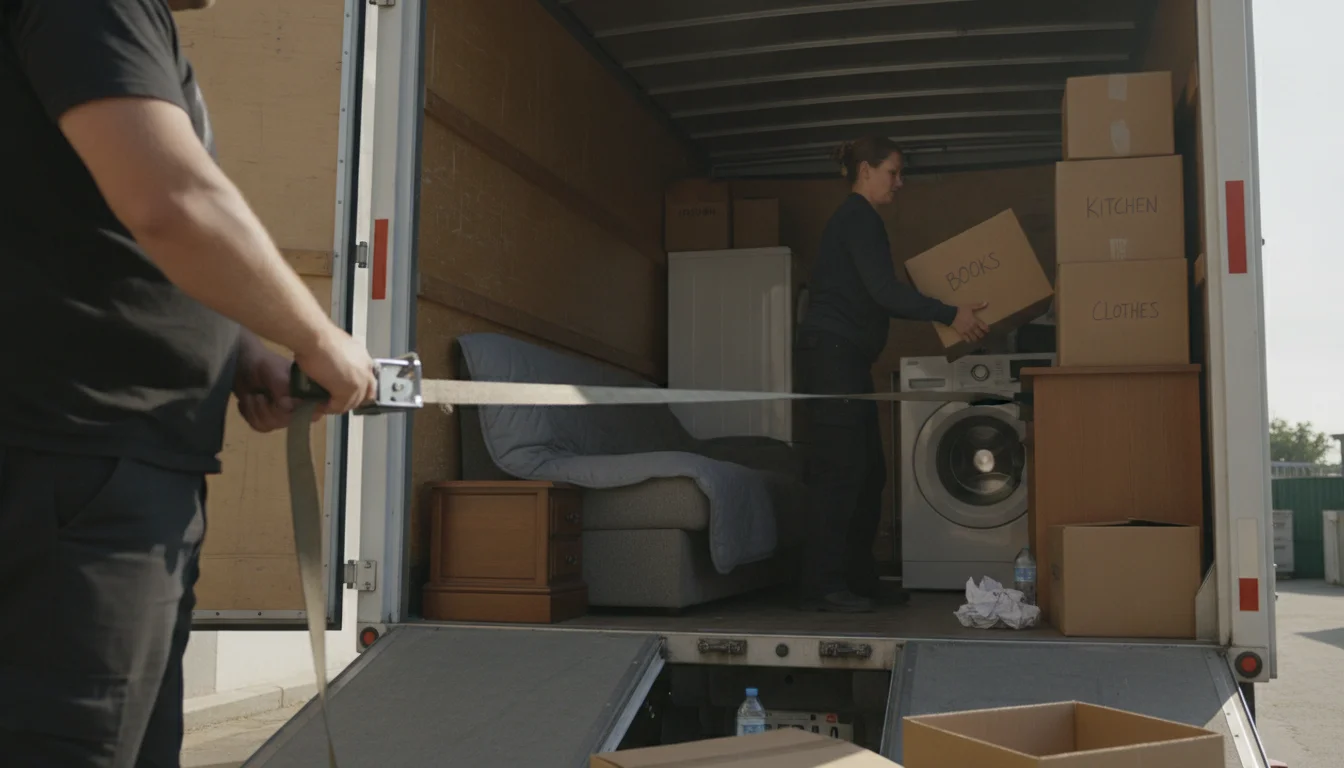
To master how to load a moving truck, pick the right truck size, stack in a heavy-to-light order, and secure each tier before adding the next. Keep weight balanced left to right and slightly forward, pad fragile pieces, and finish with light boxes on top. This approach keeps the ride stable and your items protected.
## ## ## ## ## Table of Contents
- What size moving truck do I need?
- What gear and supplies aren’t included with a rental?
- How do you load a moving truck so nothing shifts?
- How should weight be distributed for safe driving?
- What’s the best timing for pickup, loading, and return?
- How do you protect fragile items, furniture, and the truck?
- Do I need help or can I DIY the load?
What size moving truck do I need?
Most homes fit somewhere in the 10–26 foot rental range. A compact studio can ride fine in a cargo van or 10-foot truck, while larger homes call for more space. Aim to match interior volume to your inventory instead of guessing by bedrooms alone. The right fit reduces trips, stress, and awkward stacking.
Cubic feet refers to the truck’s internal space, calculated by length × width × height. Start by listing bulky pieces first. Sofas, mattresses, dressers, and appliances consume the most room, while same-size boxes fill the rest efficiently. Uniform moving boxes stack far better than mixed bins. If you own several long or tall items—bookcases, a sectional, or exercise equipment—consider sizing up.
### ### ### ### ### How to estimate cubic feet for your home
Begin with a simple rule of thumb: think in terms of the number and size of your large items plus the count of boxes you expect, recognizing that this is a guide rather than a guarantee. Bulky but light items like patio cushions occupy space fast. Heavy, compact items like books add weight before they take much room. When uncertain, plan for a touch of extra space so you can maintain strap aisles and keep stacks square.
### ### ### ### ### When two trips beat one big truck
Two shorter runs can be smarter than a single long truck in tight streets or small lots in Lynchburg. Shorter trucks park and turn more easily and can be steadier in blustery conditions. If your new place is nearby and the route is simple, two calm trips often outshine cramming everything into one top-heavy load. Weigh fuel, time, and whether a helper can make a second run.
What gear and supplies aren’t included with a rental?
A rental typically covers the truck only. Most packages do not include dollies, moving pads, straps, or mattress covers. You’ll also need your own tape, stretch wrap, and boxes. These add-ons protect your belongings and make loading safe and efficient. Skipping them risks damage and delays, especially on busy weekends—reserve early.
### ### ### ### ### Essential add-ons to reserve (dollies, pads, straps, covers)
A dolly is a wheeled platform or hand truck for moving weight safely. A furniture dolly’s flat base suits dressers and sofas, while an upright hand truck works for stacked boxes and appliances. Moving pads (thick blankets) prevent rub marks and dents. Ratchet straps and rope secure each layer. Mattress and sofa covers keep fabric clean and tear-free. Corner protectors help guard frames and table edges, and a door jamb protector shields entrances during tight turns.
### ### ### ### ### Optional upgrades that are worth it for longer moves
For longer drives, add load bars or e-track straps that lock into built-in rails to brace rows. A ramp extension makes tall thresholds and steps smoother. Shrink wrap contains drawers and cushions. A simple tool kit for removing legs and hardware saves space and prevents snags. Work gloves and forearm lifting straps reduce strain. A floor runner protects the truck deck and your floors. If you’re traveling far from Lynchburg, carry a spare strap and a few extra pads in case your plan evolves mid-load.
How do you load a moving truck so nothing shifts?
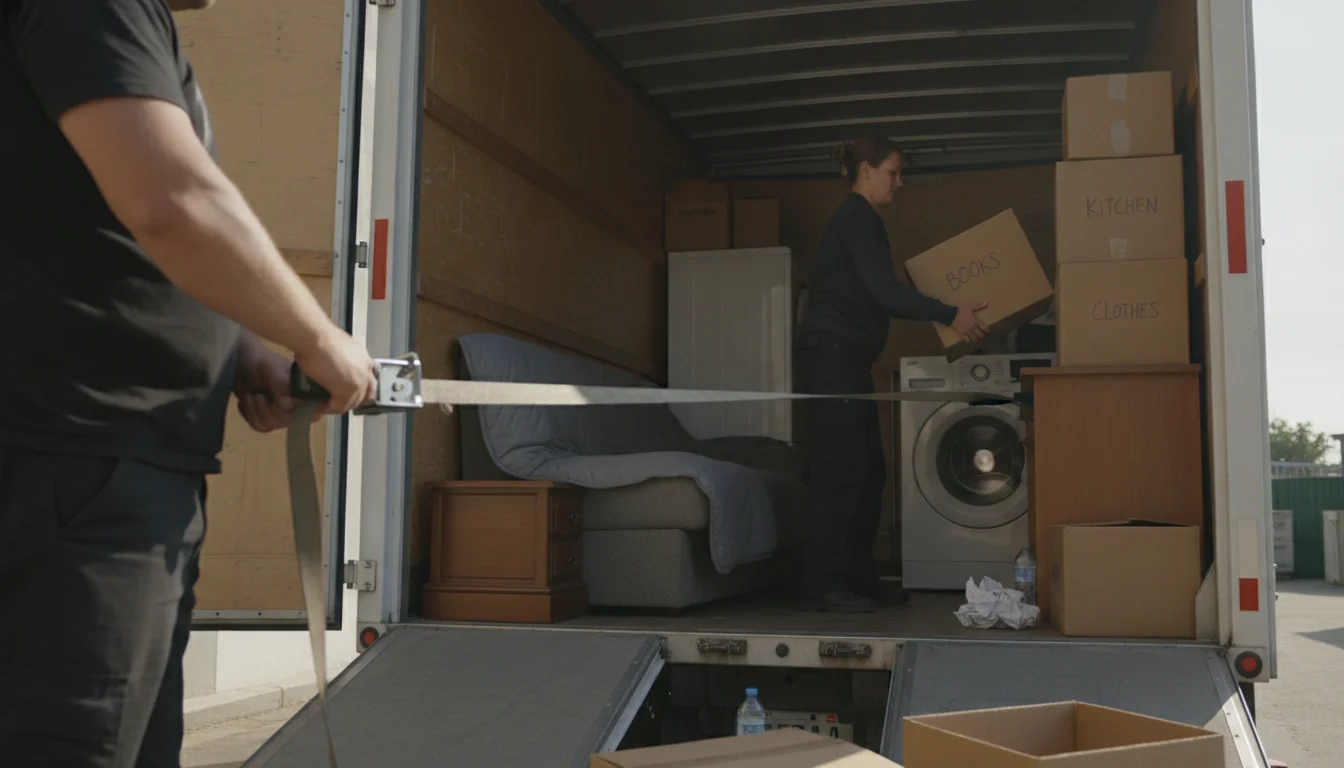
Load bottom to top and heavy to light, securing each tier as you go. Place appliances and large furniture tight to the front wall, cushion empty spaces with pads, and build stable rows of same-size boxes. Strap every layer before adding the next. This rhythm lowers the center of gravity and resists shifting.
### ### ### ### ### The ideal loading order from heavy to light
Start with the heaviest, most rigid pieces: refrigerator (upright), washer, dryer, safe, and solid dressers along the front wall. Then add sofas, armoires, and headboards. Stand mattresses on edge in protective sleeves. Create “shelves” with sturdy furniture and place medium boxes on them, saving the lightest boxes for the very top. Keep fragile boxes at mid-height or above so they’re not crushed. Label a couple of “first open” boxes and park them near the door for fast access.
### ### ### ### ### Securing the load with straps, rope, and pads
Use a strap after every 2–3 vertical feet. Pad between wood and metal to keep finishes clean. Cross-strap taller items to block sway. Rope can bundle smaller pieces, but rely on ratchet straps for long rows and heavy objects. When a bump happens, tight straps convert a potential slide into a tiny shift. Pause midway to recheck tension, then again before you roll.
Step-by-step loading sequence
- Stage packed boxes by size and weight near the entry path.
- Lay floor runners and pad sharp corners on large items.
- Load appliances and the largest furniture first, snug to the front wall.
- Strap the first layer, cushioning any contact points with pads.
- Add medium furniture and heavier boxes, fill voids, then strap.
- Stack lighter boxes to the ceiling, keeping labels readable.
- Finish with cushions, lampshades, and last-open items close to the door.
How should weight be distributed for safe driving?
Balanced weight makes the truck easier to steer, brake, and corner. Keep the heaviest items low and centered between the axles. Avoid stacking excessive weight on one side or at the very rear. A well-balanced load reduces sway, shortens stopping distances, and shields your belongings from jarring shifts.
### ### ### ### ### Balancing front-to-back and side-to-side
Bias weight slightly toward the front half of the box (near the cab) without pushing too much to the tail. Keep “twins” paired—if a bookshelf sits on the left, add a comparable object on the right to even out the mass. Place heavier boxes at the base of stacks. If one side rises higher than the other, shift a medium-weight box from the tall side to level the column.
### ### ### ### ### Common loading mistakes to avoid
Do not place heavy boxes on top of mattresses. Don’t leave tall furniture unstrapped. Skip mixed-size box towers—they topple easily. Keep the center aisle open so you can run straps and adjust layers. Don’t block the ramp with loose last-minute items. Never load prohibited or hazardous materials (like propane or solvents); most rental agreements ban them for safety. Verify your rental rules and follow them.
What’s the best timing for pickup, loading, and return?
Plan your move day in reverse from your return deadline. Confirm pickup, loading, drive, unload, refuel, and clean-up windows. Add margin for Lynchburg traffic, elevators, and building access quirks. A realistic schedule lowers stress and helps if you decide to bring in Loading & Unloading Help or Local Movers in Lynchburg.
### ### ### ### ### A realistic move-day timeline
Morning: pick up the truck early, walk around it, snap photos, and record the fuel level. Back home, your crew stages by weight and path of travel. Late morning: load heavy and bulky pieces first, strap, then continue in layers. Afternoon: finish with lighter boxes and fragile items. Early evening: drive to the destination, unload, refuel, sweep the truck, and return it within your window.
### ### ### ### ### How rental windows, fuel, and late fees work
Most rentals offer hourly, daily, or multi-day options. Returns must be on time to avoid extra fees. Refill the fuel to the level documented at pickup; photograph the gauge and keep your receipt. Many agreements include mileage—read yours to confirm pickup hours, drop-off site, and after-hours rules. Give yourself extra time so an unexpected delay in Lynchburg doesn’t trigger penalties.
How do you protect fragile items, furniture, and the truck?
Fragile items deserve deliberate packing. Use double-wall boxes for dishes and glasses, wrap each piece individually, fill every gap, and mark boxes “FRAGILE.” Shield furniture with pads and stretch wrap. Add corner guards to frames and mirrors. A padded runner keeps both the truck floor and your home surfaces in good condition.
Packing fragile items the right way
Wrap each dish in packing paper and load plates on edge like records inside a dish pack. For glasses, stuff paper inside the bowl, wrap the outside, and place them upright in cell dividers. Bubble wrap plates and framed art for impact protection. Mark arrows on cartons to indicate the upright position. Keep fragile boxes at eye level or above, not on the deck.
### ### ### ### ### Preventing scratches, dents, and floor damage
Cover wood and leather before any move. Remove table legs and hardware, bag screws, and tape the bag to the base. Use sliders or a dolly under heavy pieces to prevent gouges. In the truck, pad between metal rails and wood edges, and tape pads so they don’t slide. At home, run floor protection on stairs and tile. Move slowly on ramps with a spotter calling out obstacles.
Do I need help or can I DIY the load?
DIY is possible for many moves, but an extra set of hands speeds the day and reduces risk. Stairs, long carries, or a large home are strong reasons to hire loading help. Pros arrive with dollies, straps, and a methodical plan—and they know safe lifting techniques that protect your back.
### ### ### ### ### When to hire moving labor for loading only
Bring pros if you have a piano, a gun safe, a large sectional, or awkward, heavy items. If plans change quickly, book Same-Day & Last-Minute Movers. Apartment Movers handle elevators, loading docks, and parking logistics. For big homes, Residential Movers or Local Movers can stage and load while you manage keys, kids, and paperwork. Lynchburg Movers works these jobs every week and understands neighborhood rules, parking signs, and quiet hours.
Frequently Asked Questions
How long does it take to load a truck?
A small apartment often takes 2–4 hours with two helpers, while a full house can run most of a day. Stairs, long walks, and how well items are packed and staged all affect timing.
- How should I pack dishes so they do not break? Wrap each piece, stand plates on edge, fill spaces with crumpled paper, and label the box clearly. Use dish packs or double-wall boxes, and keep fragile boxes mid-height with nothing heavy above them.
What is the right way to bubble wrap plates?
Lay bubble wrap flat, set the plate face down, wrap fully, and tape the seam. Load wrapped plates vertically with padding at the bottom and top of the box.
Can I DIY without a dolly?
You can, but it’s slower and riskier. A dolly reduces strain and cuts trips. If you must DIY, disassemble large pieces, slide items on blankets, and team-lift with clear verbal cues and frequent rest breaks.
Who provides moving and storage solutions near me?
Many providers offer moving labor, truck loading, and short-term storage. In Lynchburg, look for Loading & Unloading Help, Local Movers, or Long Distance Movers, and always check reviews. Lynchburg Movers can coordinate labor-only loading or full-service help.
## ## ## ## ## Safety tips to prevent injuries and strain
Warm up with a brief walk and light stretches. Lift with your legs while keeping the load close to your body. Wear gloves for grip. Hydrate regularly. Clear all paths before moving. Use a spotter on ramps and stairs. If an item feels too heavy or unstable, pause and get help—protect people first.
## ## ## ## ## Key takeaways
- Choose a truck that truly fits your inventory and leave room for strap aisles.
- Load heavy to light, strapping every tier and matching weight side to side.
- Protect fragile items with double-wall boxes, paper, bubble wrap, and pads.
- Build a realistic timeline from pickup through return, including fuel and cleanup.
- Call Movers for loading-only help when weight, stairs, or timing demand it.
Conclusion
Moving day runs smoother with a clear plan. Pick an appropriately sized truck, add the gear rentals don’t include, and load in low, even layers with frequent straps. Protect every fragile piece, verify your rental terms, and give yourself time buffers around Lynchburg traffic and building access. If your plan changes or you want extra muscle, Lynchburg Movers can coordinate Loading & Unloading Help or Local Movers throughout Lynchburg and the surrounding area.
If you are not sure which of these you are dealing with, it is worth having someone look at it before it turns into a bigger job. Get in touch with Lynchburg Movers today and we will tell you where you stand.